

Most Bible reading plans for beginners fail within the first two weeks. Not because people don't want to read Scripture, but because the plan doesn't fit their real life. An effective Bible reading plan for beginners must be sustainable, not just ambitious.
This guide will show you how to create a Bible reading plan for beginners that works with your schedule, personality, and spiritual season. Whether you're brand new to faith or returning after years away, these strategies will help you build a lasting habit.
Many Bible reading plans for beginners start with unrealistic goals like reading the entire Bible in 90 days or five chapters a day. When life gets busy, people fall behind, feel guilty, and abandon the plan entirely.
A better Bible reading plan for beginners begins with five minutes a day: one Psalm, a few verses from Proverbs, or a short Gospel paragraph. Small, consistent reps build the habit faster than ambitious starts that lead to burnout.
Action steps for a sustainable Bible reading plan for beginners: weeks 1-2 read one chapter daily; weeks 3-4 increase to two chapters if you feel ready; month 2 onward keep a steady pace you can sustain without stress.
Want to go deeper? Ask our AI companion to create a personalized study plan, prayer, or discussion guide based on this article.
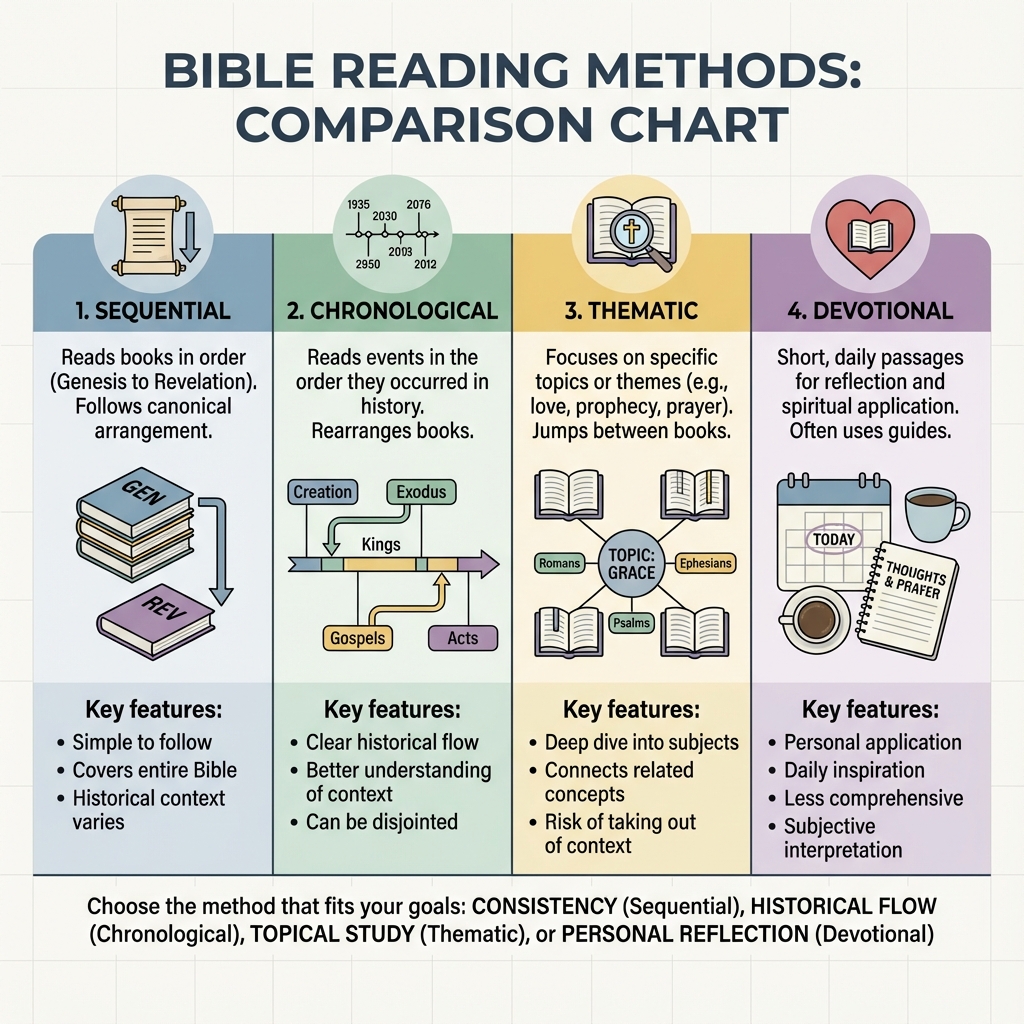
Sequential: read Genesis to Revelation. Pro: systematic and thorough. Con: can feel slow in genealogies and law sections.
Chronological: read events in the order they occurred. Pro: strengthens historical context. Con: jumps between books often.
Thematic: focus on topics like grace, prayer, or suffering. Pro: immediately relevant to current life. Con: easier to miss the broader narrative.
Devotional: short curated passages with reflection. Pro: quick and meaningful for busy schedules. Con: not always comprehensive.
Ask three questions: how much time can you truly give (5, 15, or 30 minutes)? What time of day is predictable for you? How fast do you read (one Gospel chapter is about 3-4 minutes)?
Typical timelines: entire Bible in one year needs about 3-4 chapters per day; in two years about 1-2 chapters; New Testament in 90 days is roughly three chapters per day.
It is better to read consistently for five minutes than sporadically for thirty. Pick the smallest sustainable slot.
Find a reading partner and swap one-line check-ins. Join a small group or online community for weekly sharing.
Track a streak so you can see progress. Make a public commitment to one or two friends. Hold a short weekly review to adjust pace before you burn out.
Missed days: use a grace policy. If you miss one, just read tomorrow. If you miss several, resume where you stopped instead of catching up.
Tough passages: use a skip-and-return approach. If you get stuck in Leviticus, read Psalms or a Gospel for a bit, then return with a study guide.
Confusing sections: compare two or three translations, use a study Bible, and ask questions in community or forums.
Track daily completion, reading streaks, books or chapters finished, key insights, and simple prayers or applications.
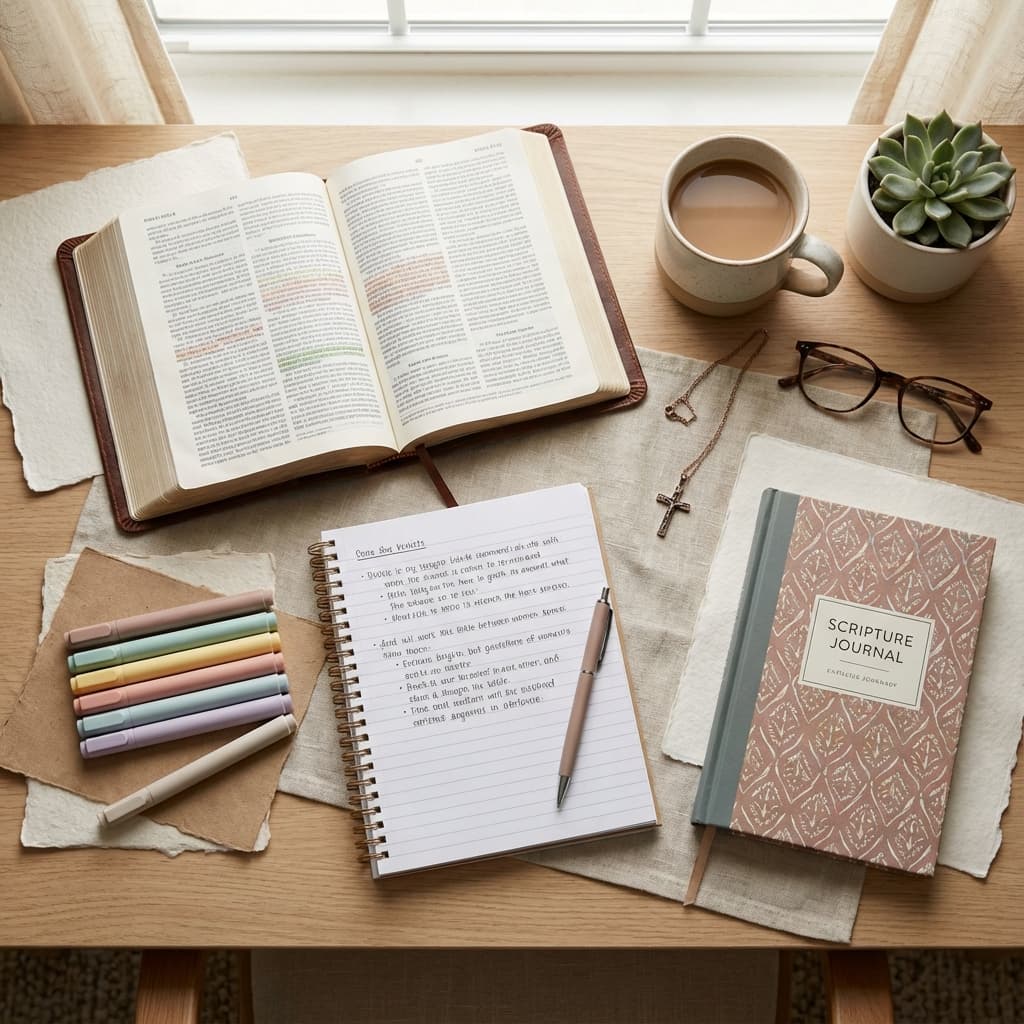
Use whatever fits you: a Bible reading app, a physical journal, or a simple checklist or spreadsheet. Review progress weekly to see momentum.
Morning anchor: read before checking your phone. Lunch refresh: take five minutes mid-day to reset with a short passage.
Commute companion: listen to an audio Bible or sermon on the way. Family time: read one verse together and ask one question at dinner.
Verse memorization: write a verse on a sticky note where you will see it and repeat it aloud through the day.
Step 1: choose a goal (entire Bible in one or two years, New Testament in 90 days, one book deeply, or a theme).
Step 2: decide daily time (5, 15, or 30 minutes). Step 3: pick a reading style. Step 4: choose a tracking method. Step 5: add accountability and set a start date.
Build my plan with AI
Pick your first book (John works well), set a five or ten minute slot for tomorrow, and text one friend to check in with you next week.
The goal is not speed; it is to keep showing up. Small, steady reading will reshape your habits and heart over time.